
Why We Hire Electrically Licensed Leads: Interview with Doug Cave | SJS VDC
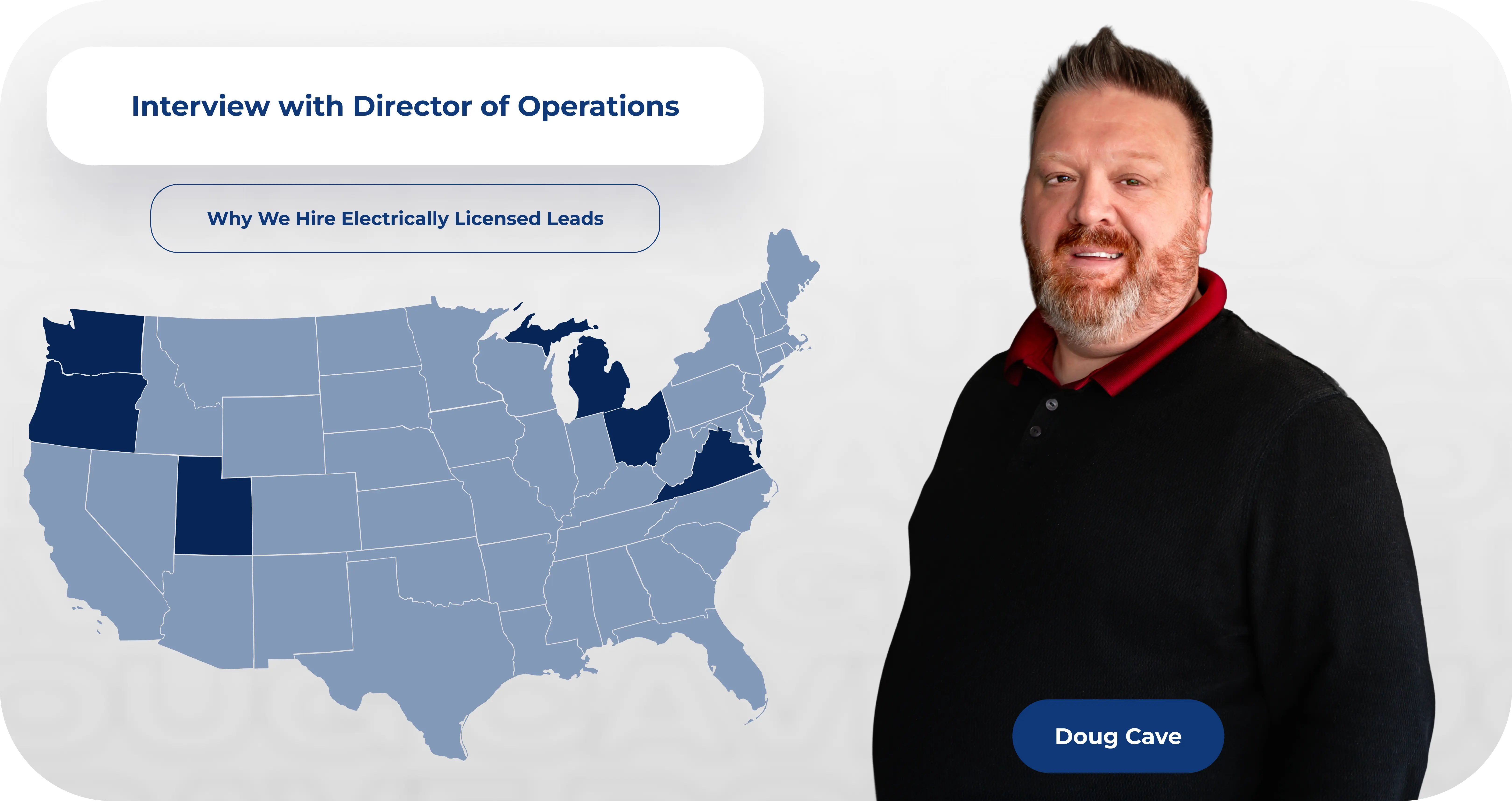
At SJS, our foundation is built on real-world electrical construction expertise.
Our Founder and CEO is a licensed electrician, and that perspective shapes how we develop our processes and procedures. We prioritise solutions that reflect what it actually takes to build in the field—not just what looks correct in a model.
In this interview, Doug Cave - Director of Operations, shares his perspective on why SJS prioritises electrically licensed leads and how this approach impacts project success.
- What key differences set licensed leads apart from non-licensed BIM leads?
- How does having licensed professionals in leadership influence decision-making during complex coordination challenges?
- Can you share an example where a licensed lead significantly improved a project outcome or prevented an issue?
- How does this approach change the way your teams collaborate with contractors and on-site electricians?
- Do you see electrically licensed VDC leadership becoming an industry standard, or remaining a competitive advantage—and why?
What key differences set licensed leads apart from non-licensed BIM leads?
Licensed electrical leads bring a level of real-world understanding that goes beyond modelling standards. They've spent time in the field, so they understand installation methods, code requirements, and how systems actually come together—not just how they look in a model.
This results in more practical, buildable designs. Instead of just identifying clashes, licensed leads are able to propose solutions that work in the field, align with electrical code, and minimise rework. That perspective bridges the gap between design intent and constructability in a way non-licensed leads often can't.
How does having licensed professionals in leadership influence decision-making during complex coordination challenges?
It adds confidence and speed to decision-making. Licensed leads don't just identify problems—they can evaluate options through the lens of code compliance, safety, and installation feasibility.
During complex coordination, that means fewer escalations and less back-and-forth with the field. Decisions can be made in real time with a clear understanding of downstream impacts, which keeps projects moving and reduces delays.
Can you share an example where a licensed lead significantly improved a project outcome or prevented an issue?
On a recent project, a licensed lead identified that a proposed routing solution would have technically cleared clashes in the model but created major installation challenges and potential code conflicts in the field.
Because of their electrical background, they were able to redesign the routing early in coordination to maintain proper clearances, improve accessibility, and stay compliant with code. That adjustment avoided what would have likely been a field redesign, saving both time and cost while keeping the schedule intact.
How does this approach change the way your teams collaborate with contractors and on-site electricians?
It builds immediate credibility and trust. When field teams know they're working with someone who understands their challenges firsthand, communication becomes more direct and productive.
Licensed leads can speak the same language as electricians and foremen, which helps align expectations and reduces friction. Instead of pushing models downstream, our teams collaborate more closely with contractors to develop solutions that are not only coordinated, but actually installable.
Do you see electrically licensed VDC leadership becoming an industry standard, or remaining a competitive advantage—and why?
Right now, it's still a competitive advantage—but it's where the industry is heading. As projects become more complex and schedules tighter, there's less tolerance for disconnects between design and construction.
Firms that integrate field expertise into VDC leadership are better positioned to deliver coordinated, buildable solutions. Over time, more companies will move in this direction, but those who adopt it early will continue to stand out in terms of quality, efficiency, and reliability.
At SJS, electrically licensed leadership isn't an added benefit—it's a deliberate standard. It reflects a commitment to bridging the disconnect between design and construction through experience, not assumption.
While the industry continues to move in this direction, we believe the difference lies in how early and how intentionally this approach is adopted. Because in the end, the most effective coordination isn't measured by the model—it's measured by how well it builds.


