Checklists turn good intent into repeatable results.
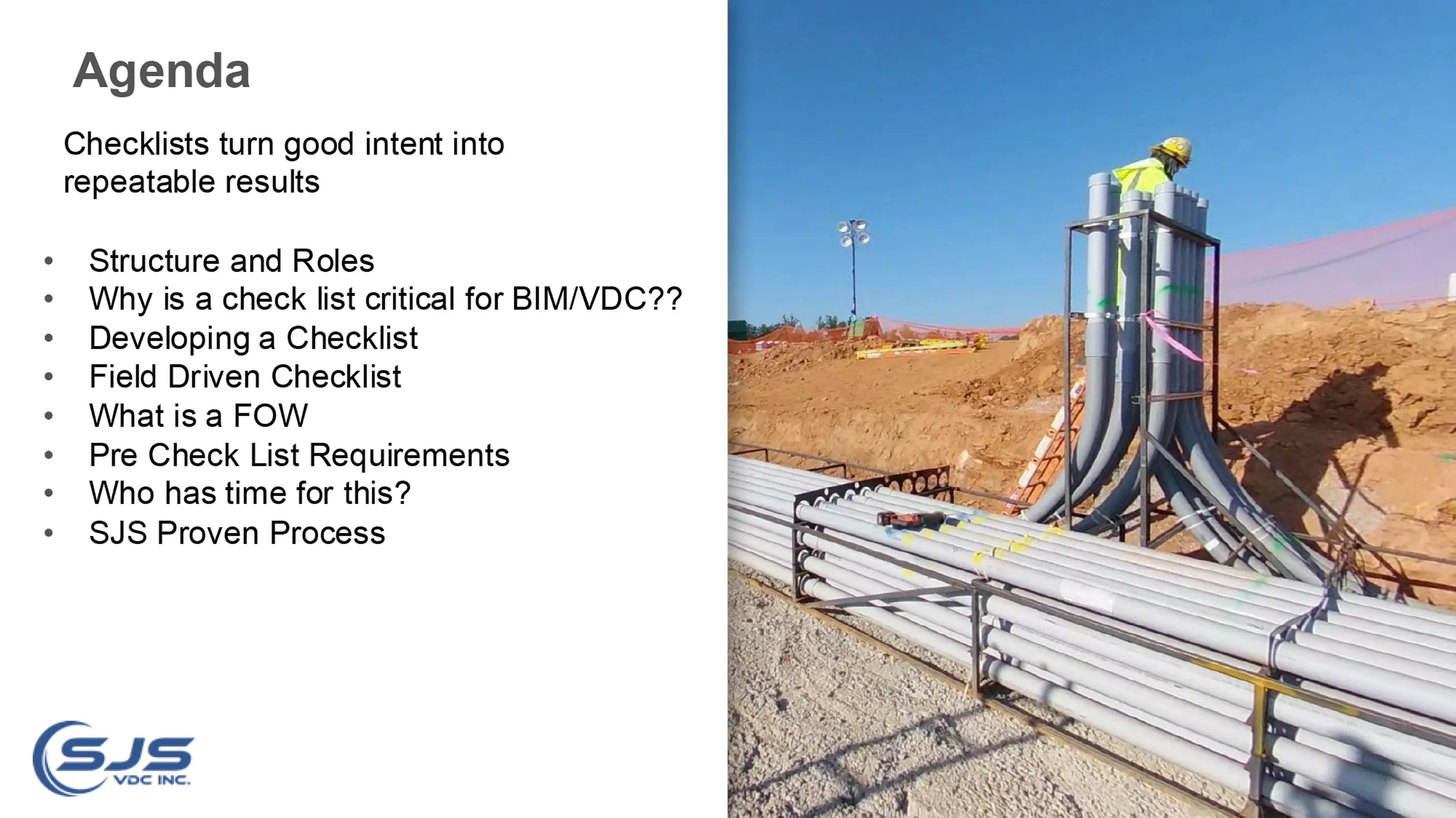
- Structure and Roles
- Why is a check list critical for BIM/VDC??
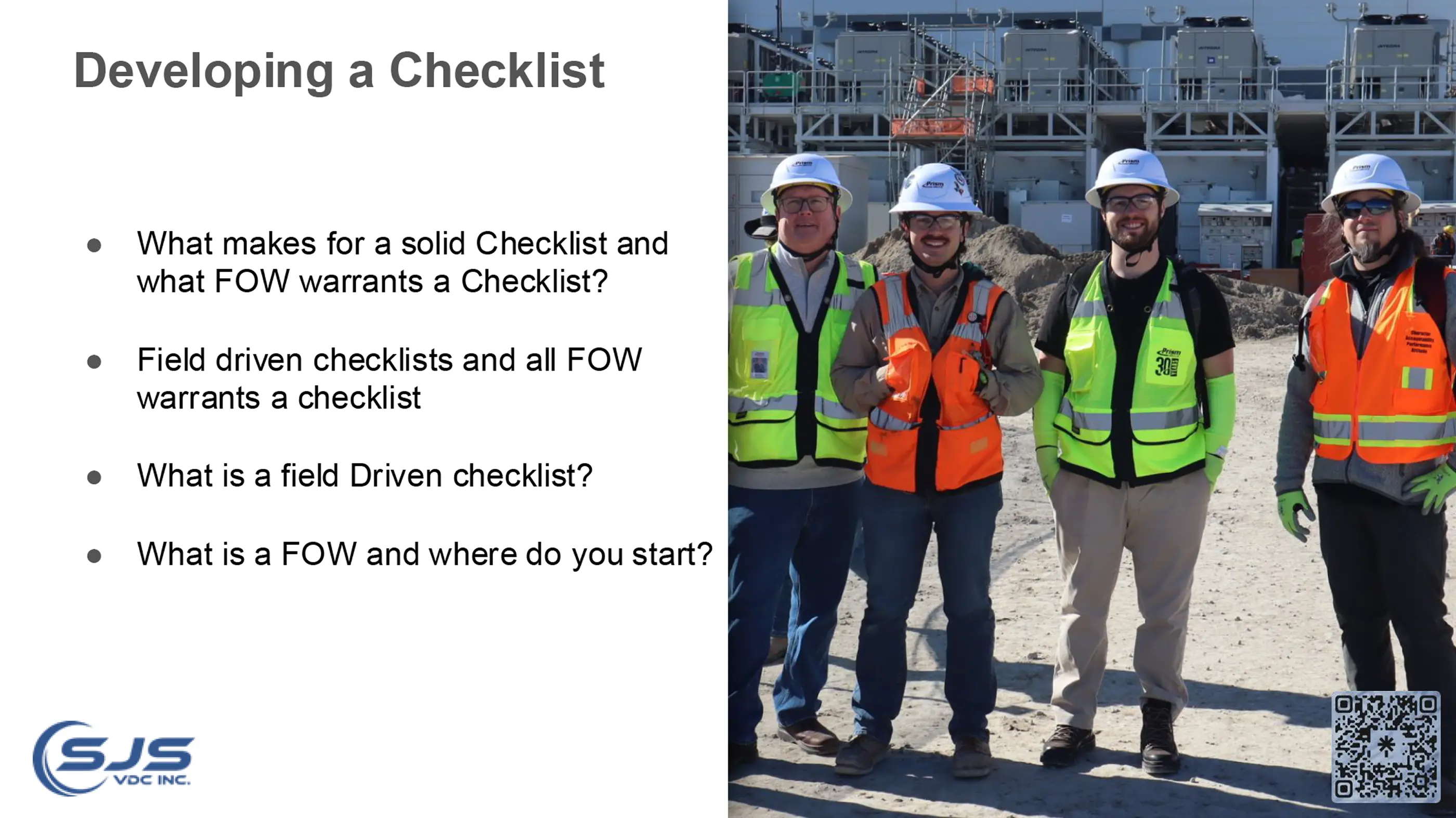
- Developing a Checklist
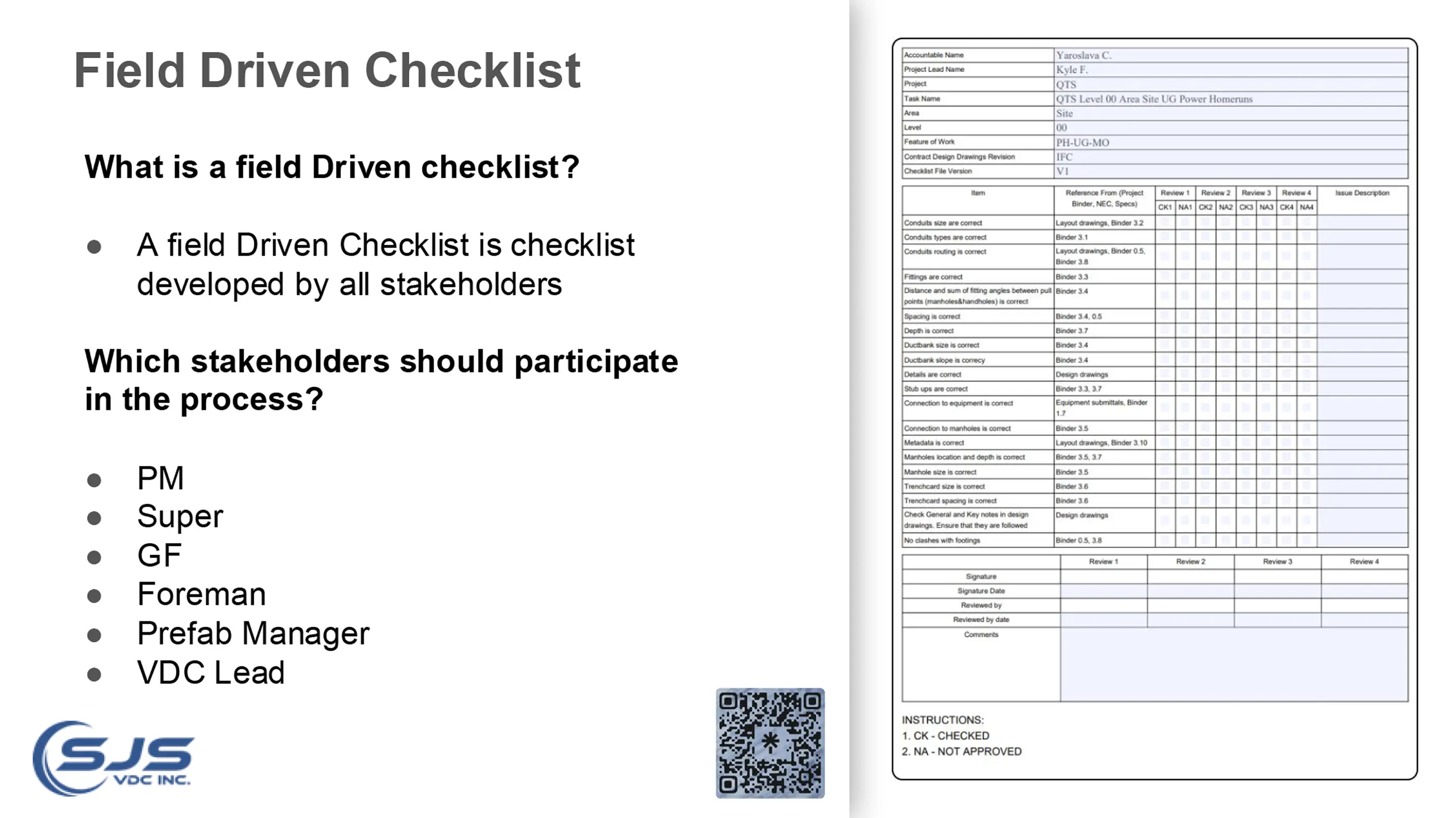
- Field Driven Checklist
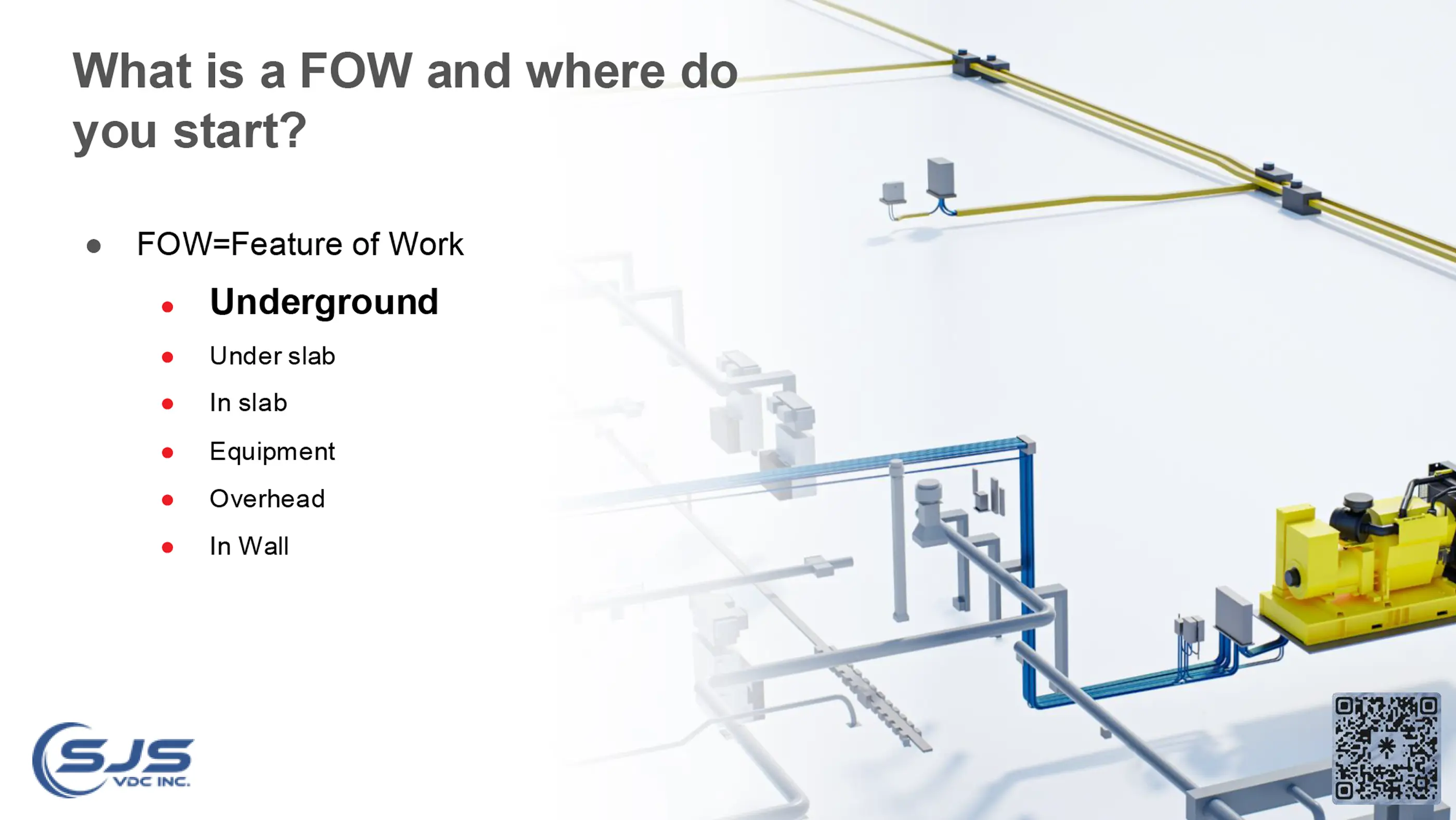
- What is a FOW
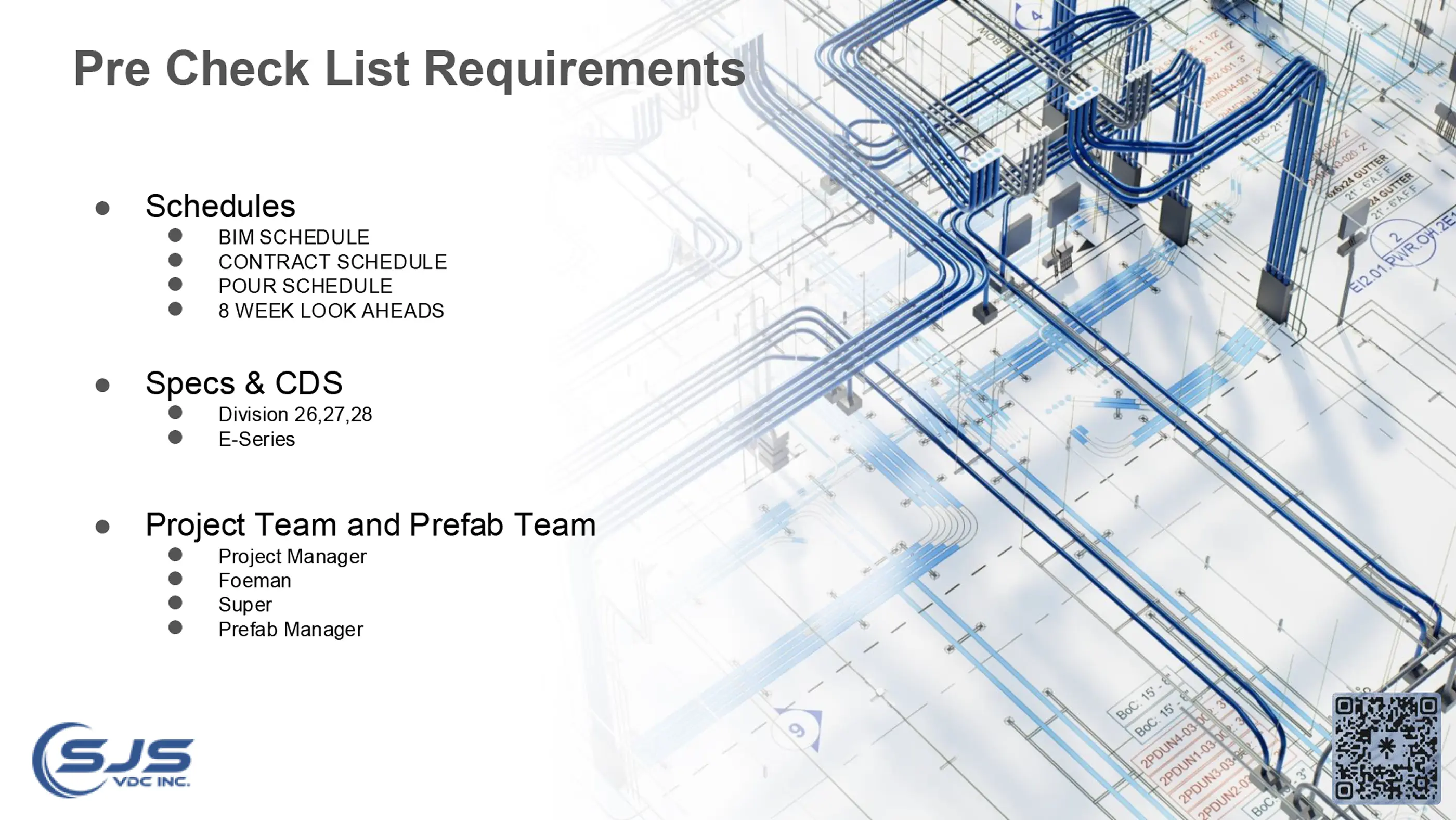
- Pre Check List Requirements
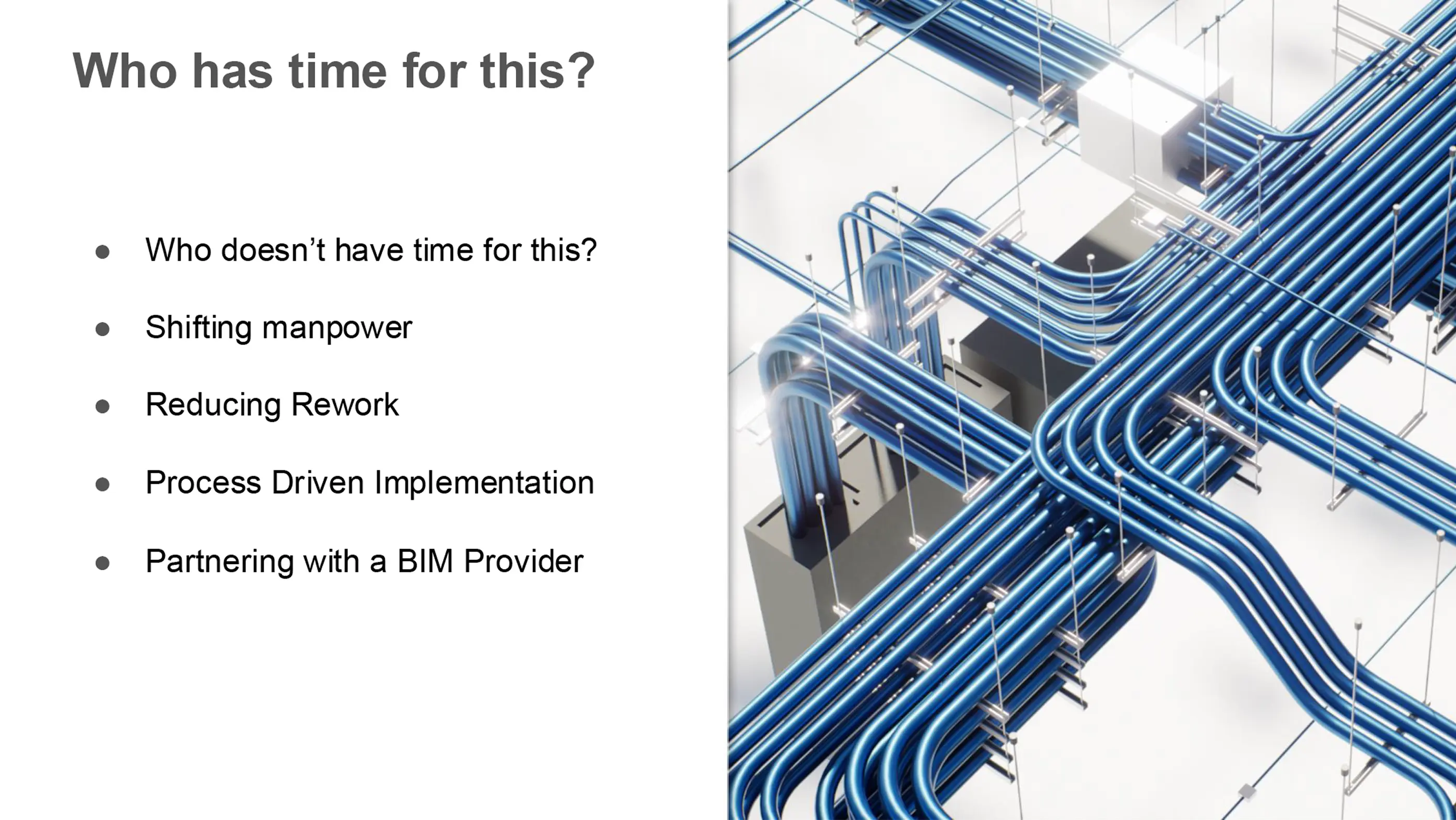
- Who has time for this?
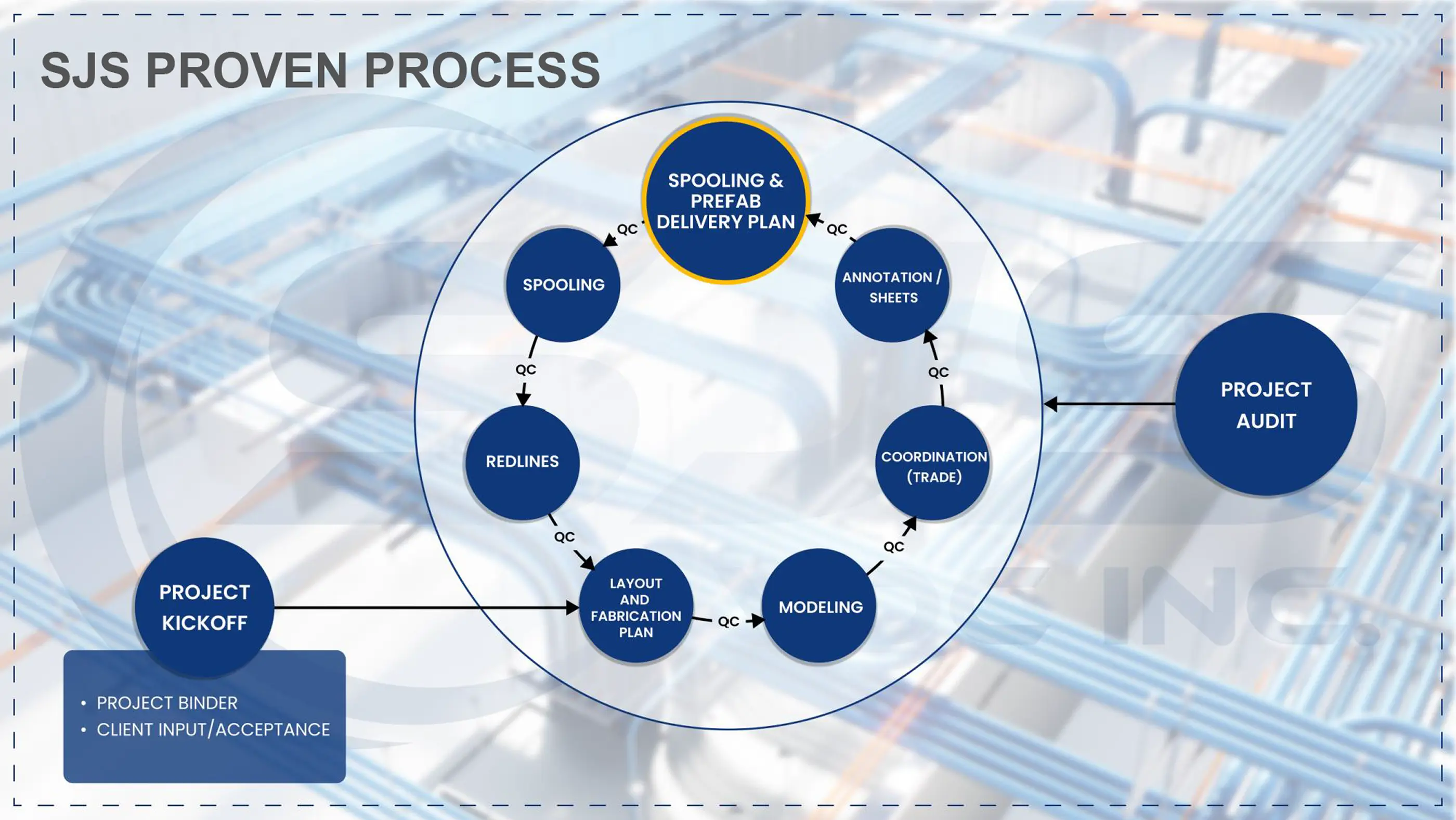
- SJS Proven Process
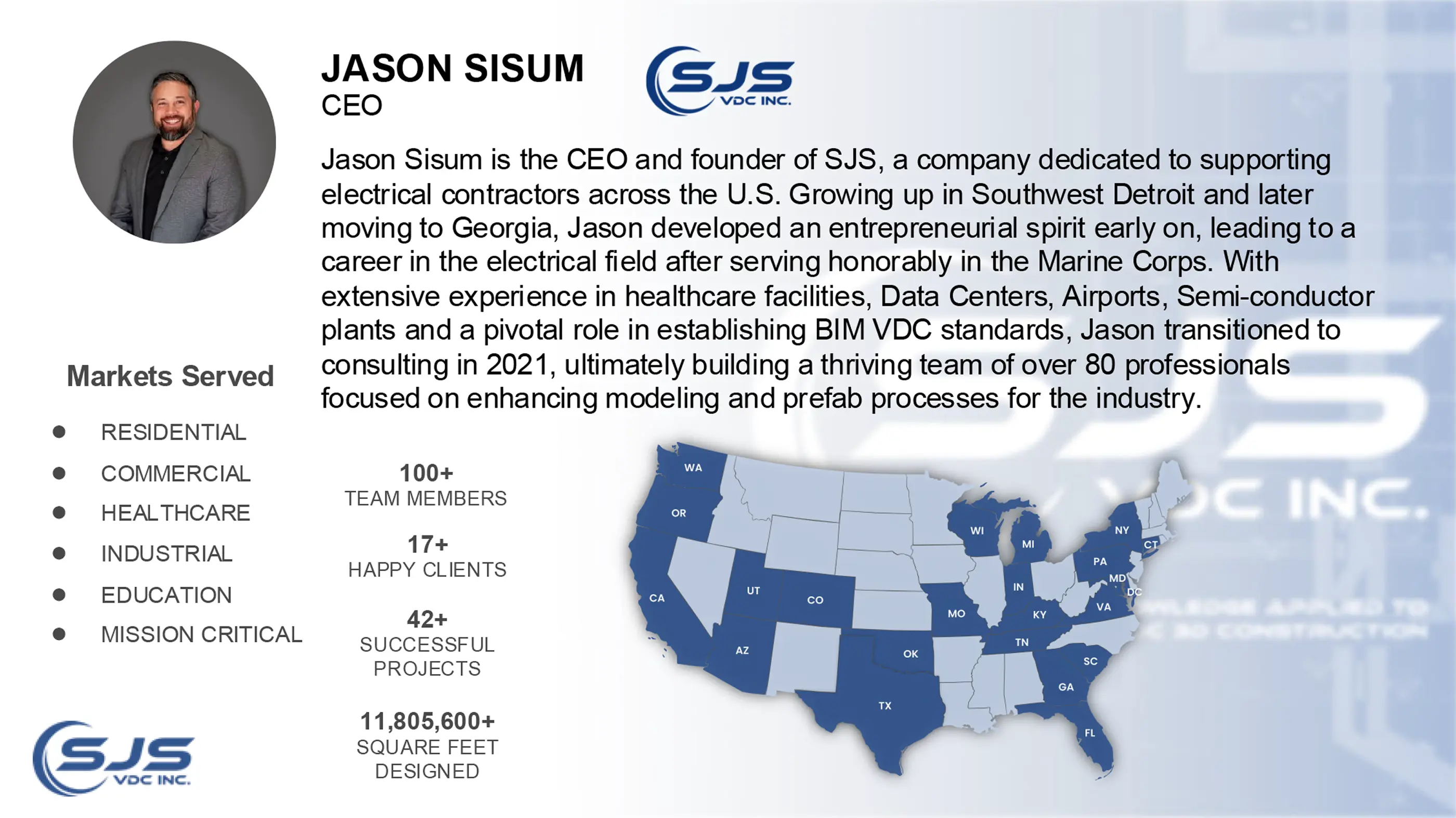
Our Background & Field Experience
10-year background working in the field with prefab, spooling drawings, and installation, emphasizing the company's focus on connecting with field operations.
- Field-driven BIM fundamentals
- Core structural agenda
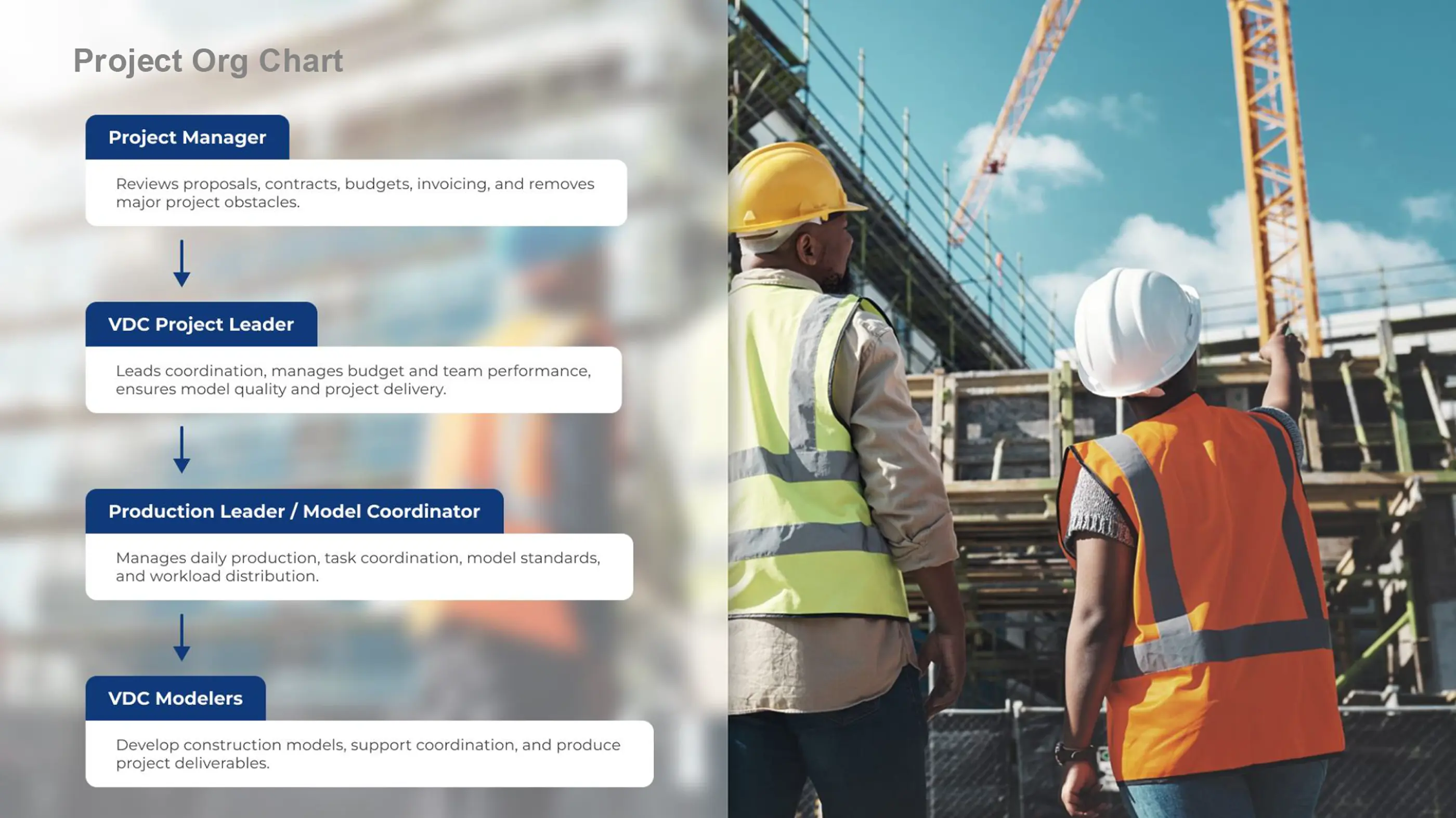
- Organizational team matrix
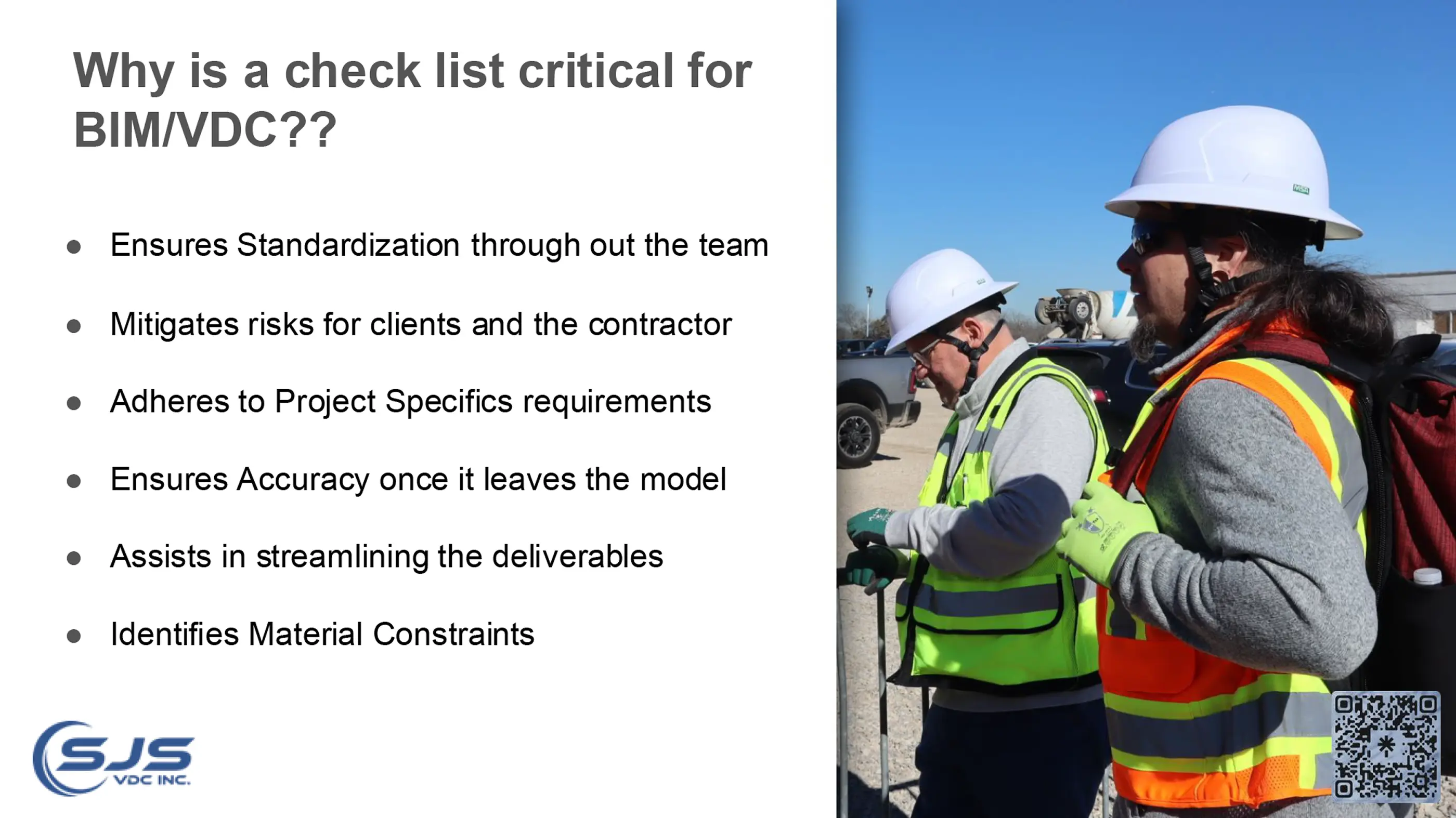
The Strategic Value of the Checklist
Task standardization:: The enforcement of uniform construction methods across all team members for basic field tasks, such as box support installation.
Liability risk mitigation:: The stabilization of contractor liabilities through structured prevention of schedule delays, design errors, and material omissions.
Supply chain logistics tracking:: The early integration of exact physical material dimensions into digital models to counteract 52-week lead times on long-lead items like fiberglass conduit sweeps.
Designing a Field-Driven Checklist & Defining FOW
Multi-department collaborative design: The joint development of quality standards combining risk/cost data, field installation realities, off-site manufacturing constraints, and VDC modeling data.
Features of Work (FOW) classification: The categorization of distinct construction milestones—specifically underground, under-slab, in-slab, equipment, overhead, and in-wall—requiring individual criteria sets.
Virtual-to-physical quality integration: The mechanical synchronization of physical site constraints and National Electrical Code (NEC) standards directly inside a digital BIM environment.
The Prerequisites of Checklist Development
Dynamic schedule synchronization: The continuous tracking of concrete pour timelines and 8-week look-aheads to adapt to shifting on-site mechanical, electrical, and plumbing (MEP) sequences.
Cross-division document extraction: The comprehensive review of hidden blueprint requirements located outside electrical drawings, specifically within Mechanical (Division 23) and General Requirements (Division 00).
Cross-functional alignment loops: The execution of frequent operational check-ins between project, prefab, and modeling teams to maintain structural uniformity across large-scale builds.
The ROI of Pre-Planning & The SJS Workflow
Pre-planning return on investment: The documented labor metric showing that 1 hour of front-end planning prevents up to 7 hours of back-end field rework.
Centralized proven process gatekeeping: The execution of a formalized, step-by-step Quality Control (QC) flow initialized by a Master Project Binder at kickoff, which funnels project specifications into hard gatekeeping milestones to block layout, modeling, and manufacturing errors from cascading forward.
Next Steps
Technical deep-dive roadmap: The long-term scheduling of 30-minute technical sessions designed to analyze specific, granular checklist data items.
Sequence-of-work scheduling preview: The upcoming procedural focus on analyzing underground schedule execution and populating data sets from Division 26 specifications.
Resource documentation delivery: The final distribution of digital assets, operational links, and company resource paths via localized scan codes.